Uncovering the Secrets of F1 Aerodynamics
Formula 1, a pinnacle of motorsport engineering, showcases the incredible achievement of aerodynamic design. At the heart of these high-speed machines lies the complex interplay between the car and the surrounding air. Aerodynamics is the science that governs this interaction, dictating how air flows around the car, influencing its speed, handling, and ultimately, its success on the track.
Understanding Downforce and Drag

(Illustrations by Beau and Alan Daniels)
Two key concepts drive aerodynamic performance in F1: downforce and drag.
- Downforce is the force that pushes the car downwards onto the track. This increased grip allows drivers to corner at astonishing speeds, navigating bends with incredible precision and speed.
- Drag, on the other hand, is the resistance the car experiences as it moves through the air. Minimizing drag is crucial for achieving high top speeds on straights, allowing the car to accelerate quickly and maintain its momentum.
Key Aerodynamic Components
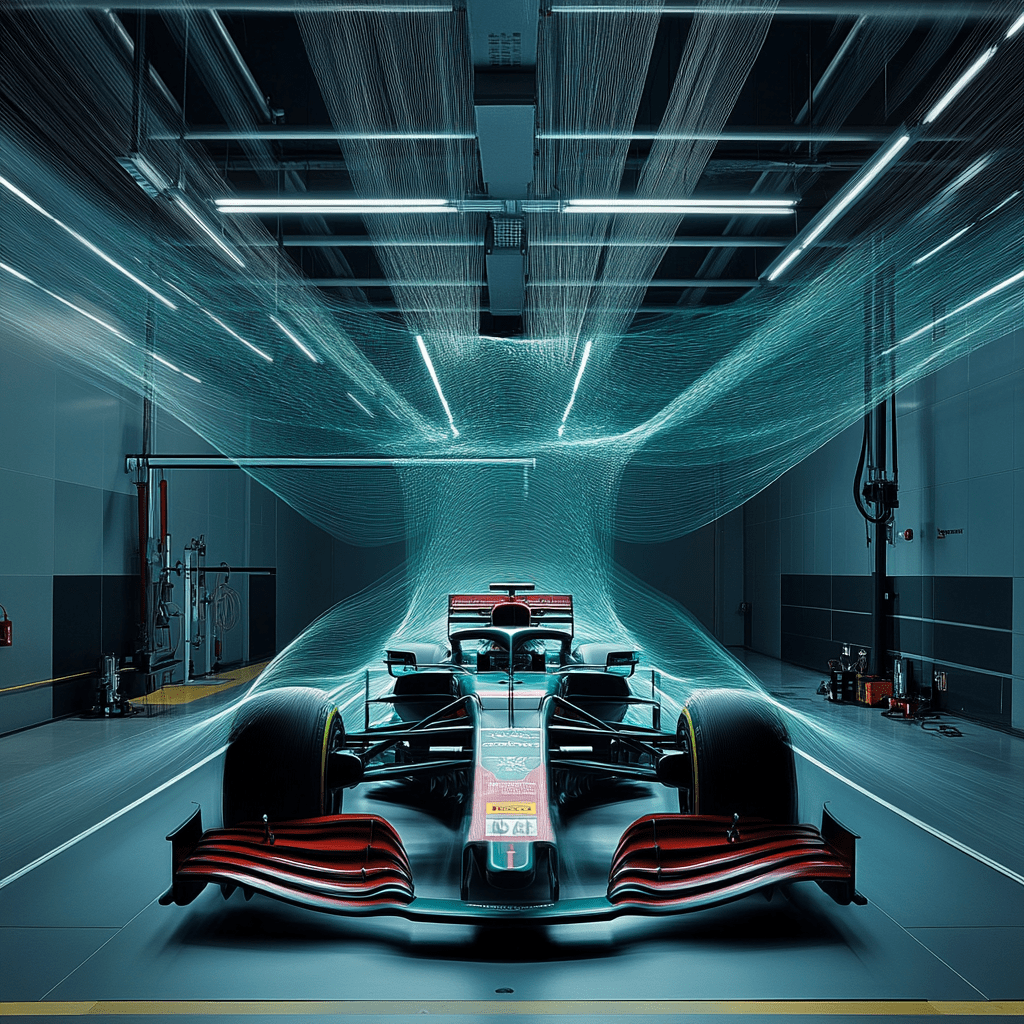
F1 cars are meticulously designed with a multitude of aerodynamic components to optimize these forces:
- Wings: The front and rear wings are perhaps the most visible elements, generating significant downforce. Their shape, angle, and size are constantly adjusted to suit different track conditions and racing strategies.
- Diffusers: Located beneath the car, diffusers accelerate the airflow passing underneath, creating a low-pressure zone that sucks the car towards the ground, further enhancing downforce.
- Bargeboards: These complex structures, situated on the sides of the car, channel airflow and manipulate it to improve downforce and reduce drag.
- Bodywork: Every surface of the car, from the nose to the rear end, is carefully sculpted to optimize airflow and contribute to the overall aerodynamic performance.
The Pursuit of Perfection
The pursuit of aerodynamic perfection is an ongoing challenge for F1 teams. Advanced computational fluid dynamics (CFD) simulations and extensive wind tunnel testing are employed to analyze airflow patterns, identify areas for improvement, and refine the car’s design.
The constant evolution of aerodynamic regulations and the relentless pursuit of performance by teams push the boundaries of engineering and innovation in Formula 1, resulting in increasingly sophisticated and breathtakingly fast race cars.
 f1 frontline